Observation
Study the current room with limited information and decide whether the active state is helping or hurting your read.
Project
Moth Mania capstone puzzle platformerSystems Page
What makes this project click for me is when light, darkness, and escort behavior all change the meaning of the same room.
I didn't want Moth Mania to lean on one isolated gimmick. The M.O.T.H.A.M. gear, Mothlett target rules, hidden-path readability, and player experience goals all overlap to make movement feel tactical instead of automatic.
Core Loop
The gameplay loop starts simple, then gets more demanding once the player realizes that reading the level and guiding Mothletts are not always compatible at the same time.
Study the current room with limited information and decide whether the active state is helping or hurting your read.
Test routes, discover hidden paths, and use state switching to reveal what the room is actually asking of you.
Recover Mothletts and manage the fact that too much time in the wrong state can strand them at poles or force extra trips.
Reach the exit, reunite surviving Mothletts, and carry that momentum through the current five-level slice.
Current Build
The current build is a five-level capstone slice that ramps from onboarding and routing to heavier escort pressure and enemy-driven threat.
Light Block Labyrinth establishes the facility tone and teaches the player to read space before committing.
Night Crawlers on Parade pushes visibility and positioning by making enemy reads part of the room solve.
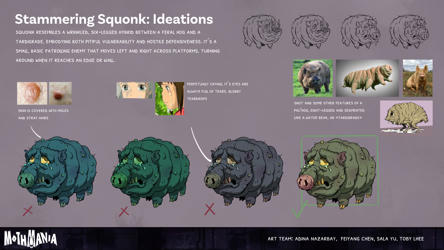
Squonk Roast increases escort friction by mixing traversal pressure with a more disruptive enemy presence.
Block Party adds higher consequence routing with harsher punishment and more demanding sequencing.
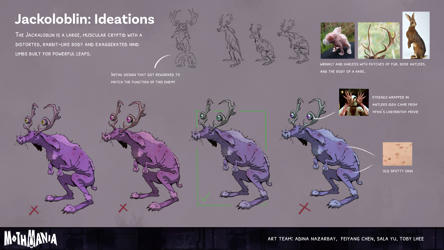
Jackaloblin Tour closes the slice with the most forceful threat profile in the currently playable build.
Dual-State System
The dual-state mechanic is the spine of the project. For me, it only works if it changes visibility, route knowledge, and escort viability instead of reading like a cosmetic toggle.
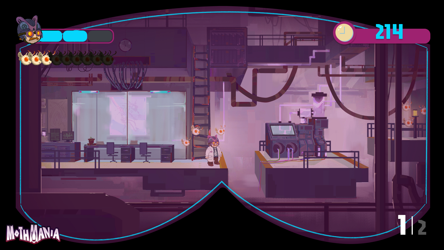
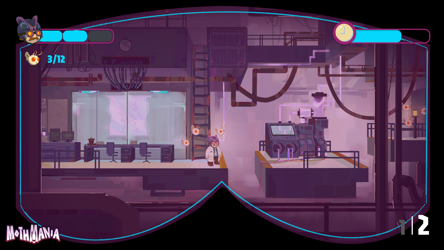
Night vision helps the player inspect dark spaces, parse hazards, and understand hidden geometry. It is the information-forward state.
Illumination restores the player's role as a guiding light source. It is the escort-forward state, even when that means sacrificing some observational comfort.
System Snapshot
Escort System
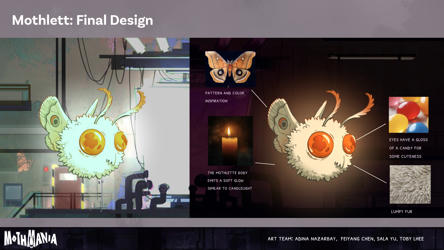
The Mothlett system matters because it feels like real game logic. They do not just trail behind the player; they evaluate valid light sources and choose targets using consistent priority rules.
That rule set makes escorting an active responsibility. I wanted the player to balance safety, visibility, and momentum instead of collecting followers once and forgetting them.
Player Goals
In the project documentation, I framed the intended experience around two linked goals: first make players stop and think, then ask them to juggle mastered systems under pressure.
I want players to feel curious, logistical, and rewarded when the solution finally clicks. Clarity in silhouettes, feedback, and room communication all support that.
Once the basics are understood, I want the game to become more crowded in a controlled way: escort rules, hazards, timing, and route planning all need to be managed at once.